
Turn your eye for adornment into a real design career as a Jewelry & Accessories Designer
From your first sketch to a finished collection, portfolio, and sales strategy, this is the complete industry roadmap for aspiring jewelry and accessories designers who are ready to stop admiring and start making.

"Every concept I teach you ends with something made, because in this industry, your work is your argument."
— Jennifer Xue, StyleCareer.com lead course designer
What you'll learn
What you'll be able to do
- Sketch and render a cohesive capsule accessories collection — jewelry, bags, belts, or scarves — from raw inspiration to presentation-ready concept board.
- Use industry tools including Adobe Illustrator, Rhino CAD, and AI platforms like Midjourney and Firefly to generate, iterate, and visualize design concepts at professional speed.
- Understand key materials and production techniques — metal casting, resin, leather hardware, beading, and 3D printing — well enough to brief manufacturers and control quality.
- Build a small-batch production plan: vet suppliers, negotiate MOQs, manage costing, and run quality control as an independent brand or in-house designer.
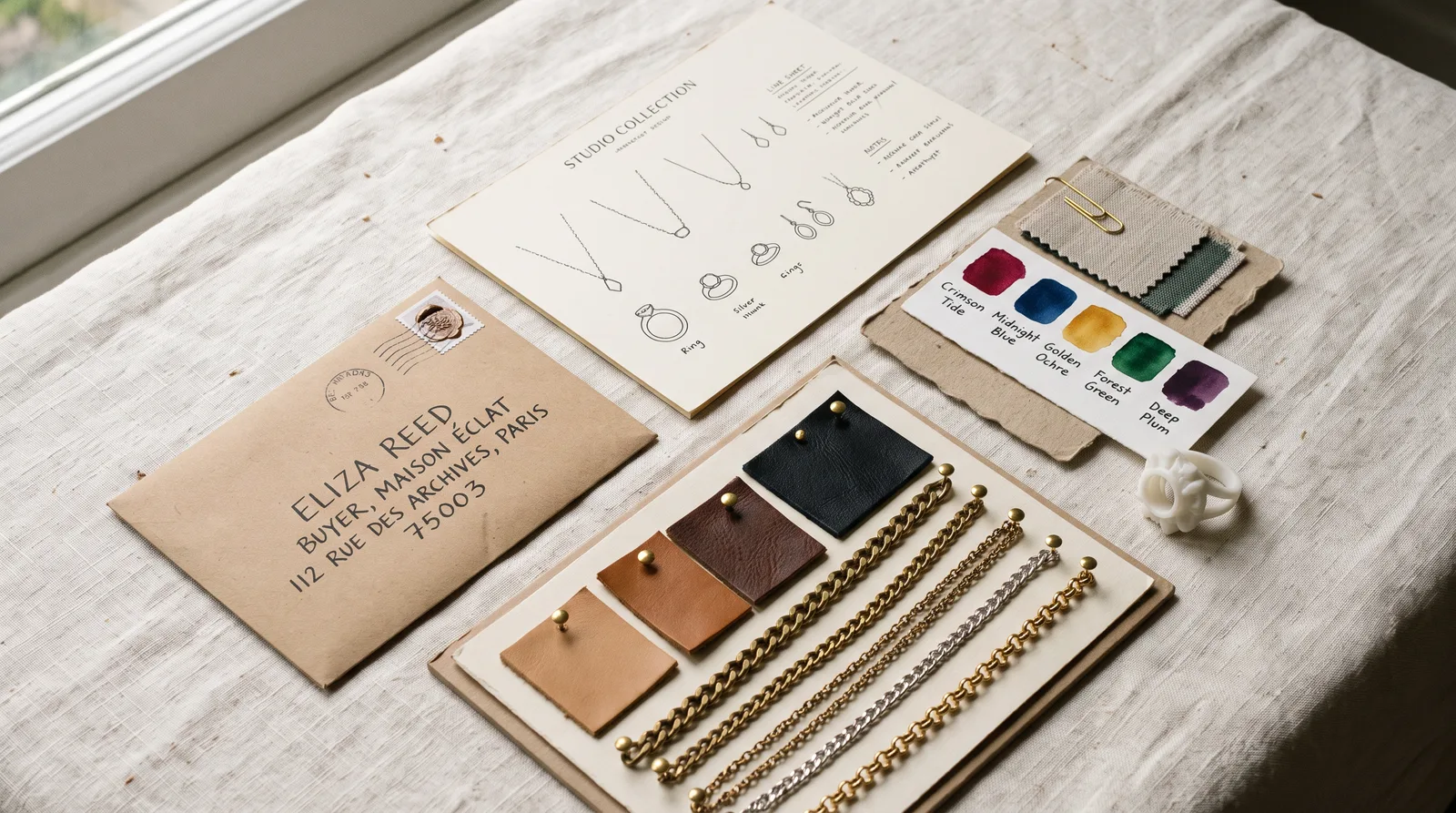
- Create a compelling brand story, structured collection line sheet, and multi-channel sales strategy across DTC e-commerce, wholesale buyers, and curated marketplaces like Etsy and Depop.
- Assemble a professional portfolio and online presence strong enough to pitch retailers, apply to brands like Mejuri, BaubleBar, or Coach, or launch your own accessories label independently.
How it works
A school that adapts to you
This isn't a set of static videos. Every lesson is generated live and tuned to where you actually are.
We learn your level
A quick placement check tailors your starting point so you're never bored or lost.
Lessons adapt as you go
Each lesson is written for your pace and your goal, adjusting as your skills grow.
Your AI coach keeps you moving
Checkpoints, feedback, and gentle nudges turn progress into a real result.
The curriculum
What's inside your school
12 modules · 48 lessons
Myths & Realities of the Jewelry & Accessories Designer Profession
Cuts through misconceptions to show what jewelry and accessories designers actually do and how the industry is structured.
- 1.1What a Jewelry & Accessories Designer Actually Does (vs. What People Think)Included
- 1.2Myth-Busting: "You Need to Be a Trained Goldsmith" and Other MisconceptionsIncluded
- 1.3Jewelry Designer vs. Accessories Designer vs. Fashion Designer — Clarifying the ConfusionIncluded
- 1.4A Day in the Life: Real Jewelry & Accessories Designers, Real WorkflowsIncluded
Foundations of Jewelry & Accessories Design
Builds essential industry knowledge — history, product categories, materials, and developing a personal aesthetic.
- 2.1The History and Evolution of Jewelry and Accessories DesignIncluded
- 2.2Categories of the Craft: Fine Jewelry, Fashion Jewelry, Bags, Belts, Hats, ScarvesIncluded
- 2.3Understanding Design Through Materials: Metal, Resin, Leather, Textile, BeadsIncluded
- 2.4Developing a Signature Design AestheticIncluded
Design Fundamentals & Sketching
Develops core hand-sketching and concept-translation skills every accessories designer needs before going digital.
- 3.1Sketching and Rendering Jewelry and Accessories ConceptsIncluded
- 3.2Translating Inspiration Into Wearable DesignIncluded
- 3.3Scale, Proportion, and Functionality in Accessory DesignIncluded
- 3.4Practical Exercise: Sketch a Small Capsule Accessories CollectionIncluded
Digital Design Tools (with AI Tools)
Equips you with industry software and AI platforms to generate, iterate, and present designs at professional speed.
- 4.1Industry Software: Illustrator, Rhino, and CAD for JewelryIncluded
- 4.2AI-Assisted Design: Generating Concepts and Variations with Midjourney and FireflyIncluded
- 4.33D Rendering and Virtual Prototyping BasicsIncluded
- 4.4Practical Exercise: Create an AI-Assisted Design Concept BoardIncluded
Materials & Techniques
Gives you hands-on knowledge of the key materials and production techniques used across jewelry and accessories.
- 5.1Metals and Metalworking Basics: Casting, Plating, StampingIncluded
- 5.2Alternative Materials: Resin, Beading, Polymer Clay, Found ObjectsIncluded
- 5.3Leather and Hardware Basics for Bags and BeltsIncluded
- 5.4Practical Exercise: Create a Material and Technique Sample BoardIncluded
From Concept to Prototype
Takes your design from a finished concept through sampling, manufacturer collaboration, and wearability testing.
- 6.1Prototyping Methods: Hand-Made Samples vs. 3D PrintingIncluded
- 6.2Working with Manufacturers for First SamplesIncluded
- 6.3Testing Durability, Comfort, and WearabilityIncluded
- 6.4Practical Exercise: Develop a Prototype for One Hero PieceIncluded
Small-Batch Production & Sourcing
Covers everything you need to move from prototype to small-batch production as an independent brand or in-house designer.
- 7.1Finding and Vetting Small-Batch ManufacturersIncluded
- 7.2Understanding Minimum Order Quantities (MOQs) and CostingIncluded
- 7.3Quality Control for Small ProducersIncluded
- 7.4Practical Exercise: Build a Small-Batch Production PlanIncluded
Building a Collection & Brand Story
Shows how to structure a sellable collection, craft a compelling brand narrative, and price your work strategically.
- 8.1Structuring a Cohesive Collection: Hero Pieces, Core, and StatementIncluded
- 8.2Naming, Storytelling, and Brand Narrative for AccessoriesIncluded
- 8.3Pricing Strategy: Materials, Labor, and PositioningIncluded
- 8.4Practical Exercise: Build a Mini Collection Line SheetIncluded
Selling Your Accessories Brand
Equips you with a multi-channel sales strategy covering DTC, wholesale, and curated marketplace platforms.
- 9.1Selling Direct-to-Consumer: E-Commerce and MarketsIncluded
- 9.2Wholesale Basics: Line Sheets, Trade Shows, and Retail BuyersIncluded
- 9.3Selling Through Marketplaces: Etsy, Depop, and Curated PlatformsIncluded
- 9.4Practical Exercise: Build a Sales Strategy Across ChannelsIncluded
AI & Technology Transforming Jewelry & Accessories Design
Explores the cutting-edge AI and technology tools reshaping how accessories are designed, prototyped, and sourced responsibly.
- 10.1The AI Design Stack: Generative Design and Rapid Iteration ToolsIncluded
- 10.2Using AI for Trend Research and Material InnovationIncluded
- 10.33D Printing and AI-Assisted Prototyping AdvancesIncluded
- 10.4Ethical Considerations: Originality, Sourcing Transparency, and SustainabilityIncluded
Building Your Portfolio & Personal Brand
Helps you build a professional portfolio and online presence that gets you hired or launched in the industry.
- 11.1What a Jewelry/Accessories Design Portfolio Should IncludeIncluded
- 11.2Photographing and Presenting Your Work ProfessionallyIncluded
- 11.3Building an Online Presence: Instagram, Website, and Shop PlatformsIncluded
- 11.4Practical Exercise: Assemble Your Design PortfolioIncluded
Breaking Into the Industry & Career Growth
Maps every entry path into the accessories industry — in-house, freelance, or independent brand — and shows you how to move.
- 12.1Entry Points: In-House Designer, Freelance, Launching Your Own BrandIncluded
- 12.2Pitching to Retailers and Building Wholesale RelationshipsIncluded
- 12.3Networking: Trade Shows, Maker Communities, and Industry EventsIncluded
- 12.4Where to Apply: Brands, Retailers, and Launching IndependentlyIncluded
Who it's for
Is this you?

The passionate maker
She's been crafting jewelry for years and is ready to turn her craft into a legitimate brand with real design chops and a sellable collection.

The career-changer
She's leaving a non-creative field and wants a structured, industry-grounded path into accessories design without going back to school full-time.

The fashion-obsessed newcomer
He knows every brand and trend but has never formally designed anything — this school gives him the skills to match his taste and eye.

The aspiring in-house designer
She wants to land a design role at a brand like Mejuri or Coach and needs a professional portfolio and the industry vocabulary to back it up.

The early-stage founder
He's already selling a few pieces but lacks a cohesive collection, a brand story, and a production plan that can actually scale.

The creative side-hustler
She wants to build a real accessories business on Etsy and beyond, and needs the full picture — design, sourcing, pricing, and sales strategy — to do it right.
Questions
Frequently asked
Your teacher
A note from your teacher

Jennifer Xue of StyleCareer.com
If you've been obsessing over the clasp on a necklace, reverse-engineering how a drop earring is constructed, or sketching accessory ideas in the margins of your notebook for years. I see you. That instinct is real. What's been missing isn't talent; it's a clear path from where you are to where you want to be.
I built this school because the jewelry and accessories industry has a visibility problem. From the outside, it looks like you either went to a prestigious design program, apprenticed under a master goldsmith, or you're just a hobbyist. That's simply not how most working designers got here, and it's not how the industry actually works. There are in-house designers at major accessories houses who never touched a jeweler's bench. There are independent label founders who learned CAD on YouTube and built their production relationships one email at a time. The real entry points are messier and more accessible than anyone tells you and that's exactly what I want to show you.
This school walks you through the full arc, in the order you actually need it. We start with foundations with the real design history, the categories of the craft, how to develop your own aesthetic and move into hand-sketching a capsule collection before we ever open a piece of software. From there, you'll learn to work in Illustrator and Rhino, use Midjourney and Firefly to generate and iterate concepts at speed, and understand materials metals, resin, leather hardware, beading well enough to walk into a manufacturer conversation and know exactly what you're asking for. You'll prototype a hero piece, build a production plan, write a brand story, and assemble a line sheet. Then we get into selling: DTC, wholesale, Etsy, Depop, trade shows, retail buyers. And we close with your portfolio and career launch because finishing this school without a clear next step isn't an option I'm willing to offer you.
Every section comes with a hands-on task, because this industry rewards people who make things. I don't want you to finish a lesson and file it away. I want you to finish a lesson and have something to show for it. Whether you're aiming to pitch Anthropologie with a wholesale line, apply to an accessories design role, or launch your own label this season, you'll leave with the assets, the knowledge, and the roadmap to do it. Come in ready to work. I'll meet you there.
— Jennifer Xue of StyleCareer.com
Start your journey today
Get instant access — learn at your own pace with an AI coach in your corner.
$39/mo
Recurring billing · cancel anytime
Secure checkout · Instant access
- 12 modules, 48 lessons
- AI-adaptive lessons tuned to your level
- Quizzes & checkpoints to lock in progress
- Your own AI learning coach
- Learn on any device, at your pace
- Full access for as long as you're subscribed